NICU Parent Mental Health: What Parents Need to Know
A perinatal mental health therapist and micro preemie mom shares what NICU families need to know about trauma, healing, and finding support.
By Tayyibah Chase, LMFT, Perinatal Mental Health Specialist
Prenatal and Postpartum Depression Therapist in California and Virginia
NICU Mental Health: What Every Parent Needs to Know
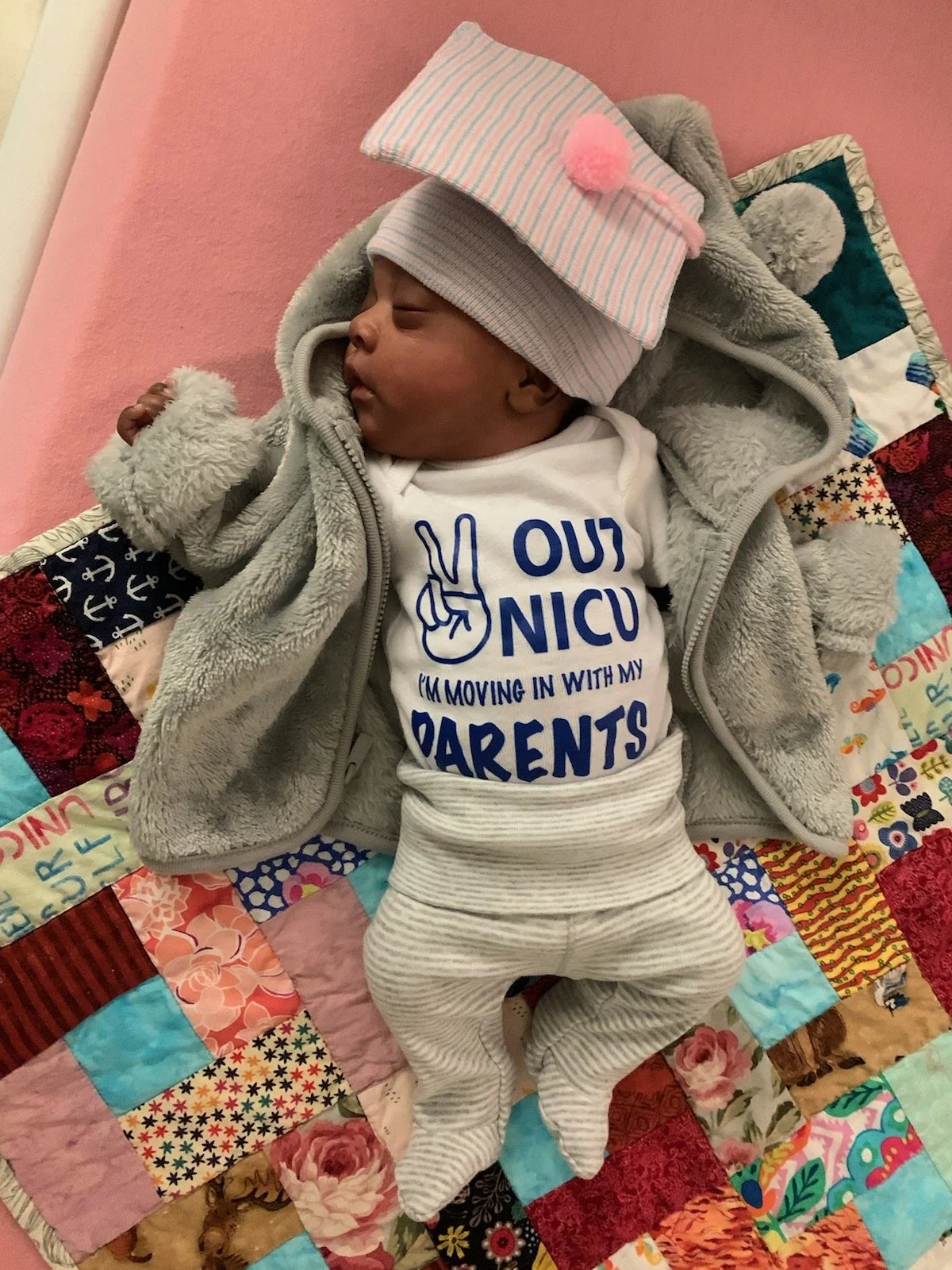
Nearly 1 in 10 babies born in the United States will spend time in the Neonatal Intensive Care Unit, and that number is growing. According to the CDC, NICU admission rates rose 13% between 2016 and 2023.
That's hundreds of thousands of families each year stepping into a world of beeping monitors, unfamiliar medical terms, and an emotional weight that nobody fully prepared them for.
I know this world. I'm a Perinatal Mental Health Certified (PMH-C) Licensed Marriage and Family Therapist and the founder of Muna Wellness, where I specialize in supporting NICU families through the emotional toll of this experience. I'm also a micro preemie mom. My kid was born at 27 weeks and spent two months in a level IV NICU.
Having the clinical training didn't protect me from the fear, the grief, or the shock. And that's exactly why I'm writing this.
I recently joined Cynthia on the Mom Chat with Mamistad podcast to talk about NICU mental health, what it really looks like, why it doesn't end when your baby comes home, and what actually helps. This post expands on that conversation.
If you're a NICU parent in the thick of it right now, or still carrying the weight of an experience from years ago, keep reading. This is for you.
THE NICU IS MORE THAN A MEDICAL EXPERIENCE
When people think about the NICU, they think about the medicine, the incubators, the oxygen levels, the feeding tubes. And yes, all of that is real. But what often goes unspoken is the emotional experience of being a parent inside that space.
My experience was chronically exhausting, overwhelming, and draining to say the least. It was a whirlwind of rapid learning, anxious nights, and an overload of information to navigate. Every NICU experience is different, but there are definitely common threads across the shortest and longest stays.
The NICU is not a place parents are trained for. You're learning a new language:
gestational age, desaturation, corrected age, bradycardia.
All while managing the most frightening experience of your life. You're making decisions without full information. You're watching your baby through glass or isolette walls. And you're expected to function.
The mental and emotional impact of this is significant and supported by research. Studies show that NICU parents have two to five times the risk of clinically significant mental health needs compared to the general population.
This is not weakness. This is a normal response to an abnormal situation.

WHAT NICU MENTAL HEALTH ACTUALLY LOOKS LIKE
In my work with NICU families, I see the same themes come up again and again. They're common. They're real. And they deserve to be named.
Guilt and Shame
Many NICU parents, especially birthing parents, carry deep guilt about their baby's arrival. Was it something I did? Something I didn't do? Could I have prevented this? These questions can become consuming, even when the honest answer is no.
I hear things like “My body feels broken” or
“ My body couldn’t do what it was created to do”.
Shame compounds the guilt. Parents often feel they're supposed to be celebrating a new baby, while their reality looks nothing like what they imagined. That gap between expectation and experience is painful, and it's rarely talked about.
Fear and Hypervigilance
Research shows that between 13% and 93% of NICU parents experience clinically significant anxiety during their baby's hospitalization. The wide range reflects how much the experience varies, but even at the low end, that's a staggering number.
Fear in the NICU makes complete sense. You are watching your child fight for their life, or stabilize, or grow day by day, sometimes hour by hour. Your nervous system is on high alert. That hypervigilance doesn't just switch off when the monitors do.
Complex Grief
This one surprises people. Grief isn't only for loss. NICU parents often grieve the birth experience they expected. The golden hour that didn't happen. The first hold that was delayed. The pregnancy that ended too soon.
Allowing yourself to grieve what didn't happen is not the same as being ungrateful for what did. Both things can be true at once.
And for families that lose a little one while in the NICU, there are layers of grieving years lost, milestones never witnessed, and a world of turmoil more. There is much more to express for infant loss. For families experiencing infant loss while in the NICU, I highly recommend exploring Mahaley Patel’s work.
The Weight of Tracking Everything
The NICU asks parents to become temporary medical experts overnight. You're tracking oxygen saturation, feeding volumes, corrected vs. chronological age, weight in grams. You're attending rounds, speaking to specialists, and advocating for your child in an environment where you didn't choose to be.
That cognitive and emotional load is exhausting and often invisible to the outside world.
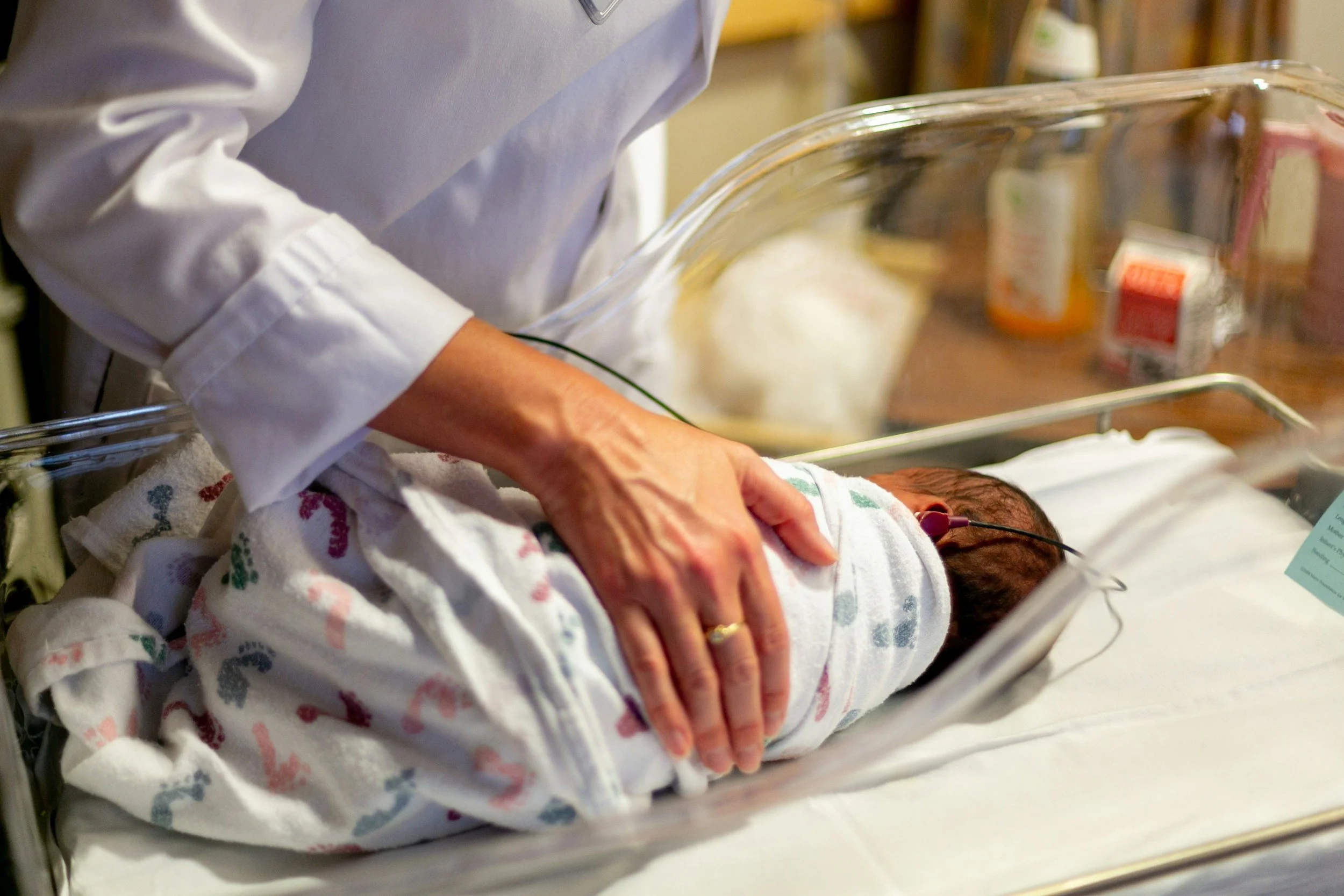
TRAUMA DOESN'T END AT DISCHARGE
Here's something I see consistently, both in my practice and in my own experience: for many NICU families, the hardest part comes after they leave the hospital.
Discharge should feel like victory. And in many ways, it is. But it also removes the safety net of 24-hour monitoring and medical staff on call. Suddenly, you're home with a baby who required intensive care, and you're the only one watching.
Research on NICU families consistently shows elevated rates of post-traumatic stress after discharge, with some studies finding that over 50% of NICU mothers experience PTSD symptoms in the months following their baby's homecoming.
Triggers can appear anywhere. A beeping sound. A medical smell. A baby monitor alarm. Your body learned to be afraid in the NICU, and it doesn't always know the danger has passed.
I remember visiting the hospital for a NICU family event after our discharge, and
I stood at the front of the hospital, overwhelmed by the heat arising in my body. In that moment, I saw another NICU graduate mom there, and we both shared tears over what felt like the longest period of our lives.
We recognized that this was only something that another NICU parent could feel in that moment.
If this sounds familiar, please know: this is not you being dramatic. This is trauma. And it is treatable.
THE NICU AND YOUR RELATIONSHIP

The NICU doesn't just affect parents individually; it places real strain on partnerships.
Parents often experience the NICU very differently. The birthing partner may be dealing with their own bodily recovery, while the non-birthing partner can sometimes feel helpless, peripheral, or unsure of their role. All experiences are valid. Neither is fully understood by the other without intentional communication.
Research shows that fathers are also significantly affected — with studies finding about 33% of NICU fathers experiencing PTSD symptoms, compared to 53% of mothers. Both numbers matter. Both people in the partnership deserve support. And these data points exclude the experiences of LGBTQ+ couples, which deserve to be highlighted as well.
In the podcast episode, Cynthia and I talked about practical tools for couples navigating the stress of the NICU, how to communicate when you're both depleted, how to give each other grace, and how to stay connected when the fear of losing your baby has taken up all the space in the room.
One argument over something seemingly small is actually a signal of something bigger happening for us beneath the surface.
You don't have to get through this as two separate individuals in the same house. There is a way through it, together.
Tools That Actually Help
Regular Check-ins with yourself and each other
With the overwhelm of taking care of the baby, we can forget to check on ourselves or each other. Scheduling weekly or daily check-ins forces us to slow down and see how we are really doing. During a check-in with yourself, you can ask:
What physical needs do I have in this moment?
What areas of my body are holding tension?
How is my breath in this moment?
In a check-in with a partner, you can:
State three things that you think have been going well in the relationship, and three things you would like to work on.
You can also ask:
What’s been the hardest part of this process for you?
How can I be of support?
I also highly recommend couples therapy.
EMDR Therapy for Birth Trauma
For NICU parents, EMDR (Eye Movement Desensitization and Reprocessing) can help address the specific memories and triggers that keep the body in survival mode long after the crisis has passed: the sound of the monitor, the smell of the NICU, the memory of a particularly terrifying night.
Working with a PMH-C Specialist
Not all therapists are trained in perinatal mental health, and the NICU experience has unique clinical features that general therapy may not fully address. Working with a Perinatal Mental Health Certified provider means working with someone who understands the intersection of birth trauma, infant loss, NICU stays, and postpartum mental health.

Building Your Village
In the episode, we closed with something I believe deeply: you were not meant to carry this alone. Building your village, finding the right therapist, connecting with other NICU parents, and allowing people to show up for you can completely change the trajectory of your healing.
Real support, found early, lightens a burden that would otherwise be carried far longer than it needs to.
YOU DON'T HAVE TO CARRY THIS ALONE
If you're reading this and something in it felt familiar the fear, the guilt, the heaviness that didn't go away. I want you to know: what you're feeling makes complete sense. And you deserve support.
I offer therapy for NICU families in California and Virginia navigating anxiety, fear, depression, and the lasting effects of a traumatic birth or NICU experience. If you're ready to begin that work, I'd love to connect.
LISTEN TO THE FULL EPISODE!
This post covers the broad strokes, but there is so much more in the conversation.
In Episode 51 of Mom Chat with Mamistad, host Cynthia and I go deeper on all of these themes — including my personal birth story, EMDR in practice, how to advocate for yourself in the NICU, and how to begin building the support system that will carry you through.

About Tayyibah Chase, LMFT, PMH-C
Tayyibah Chase is a Perinatal Mental Health Certified (PMH-C) Licensed Marriage and Family Therapist and the founder of Muna Wellness . She specializes in supporting NICU families, parents navigating perinatal mental health challenges, and couples impacted by the birth experience. As a micro preemie mom herself, she brings both clinical expertise and lived experience to her work.
Serving clients in California and Virginia.
Interested in working with a Perinatal Mental Health Specialist? Click the link below to book a free consultation.
Follow along on Instagram @muna_wellness for more support, resources, and conversation.